
Good Title: An Introduction
On art, law, and language

The art world has its own language. When curators write about conceptual practice or problematizing the Western canon, they assume the existence of an initiated reader who speaks this language, someone with enough experience to understand what these words mean. Even when writing for the general public, many art historians do the same thing when they assume familiarity with centuries of visual culture, from the Venus of Willendorf to Warhol. All of this creates an aura of chic and intimidating mystery for the outsider.
The legal profession works like this too. Many statutes and contracts are written in dense, convoluted terms. And although the best legal writing is clear and concise, many lawyers deploy Latin phrases and jargon in their legal briefs. The result is that the law often seems inaccessible to those unfamiliar with its language, an impression that only reinforces the apparent elitism of the legal profession.
Thick, technical prose is sometimes necessary: precision matters in a contract, and certain esoteric art terms convey real meaning. But often it is the byproduct of bad writing, a way of sounding like an expert at the expense of clarity. I spend a lot of my time writing about these topics because I am an art lawyer. This puts me at the intersection of two fields with big vocabularies and high barriers to entry. So when I thought about how to introduce this newsletter on art and law, I wanted to write about the art of translating complexity or, better yet, of explaining complicated things clearly. In the art world, this task often falls to the wall text posted alongside the art, which is a good place to start.
What wall text says and what it omits
Today, in most museums and art galleries, wall text is ubiquitous. In short form, it gives you the basics: who made the work, when, where, and with what materials. In longer form, it might provide historical context for a particular piece, situate an artist within a broader movement, or offer a narrative for an entire exhibition. Most wall text is meant to be accessible to the general public.
Then there is wall text that says too much and somehow nothing at all. For all the time I spend in contemporary art galleries, I still despair when I read that a certain work “interrogates the liminal space between presence and absence” or “undulates between figuration and abstraction.” Without guidance, I can’t understand this language, which transforms the experience of looking at art into an exercise in reading comprehension. I know that indecipherable art-speak is an easy mark for target practice, but it provides a clear example for a simple point: bad writing confuses the reader and muddies the experience of art.
Good art writing, however, can guide your eyes and give you the context you need to appreciate the work. It tells you where to look, what to ignore, which technique to notice, and which historical figures to remember. A few sentences can determine whether you see an object as a masterpiece or a curiosity, a conclusion you may not have come to on your own. For example, you know The Birth of Venus is a masterpiece (even if you’ve never heard of Botticelli or Early Renaissance painting) because the wall text at the Uffizi tells you so.
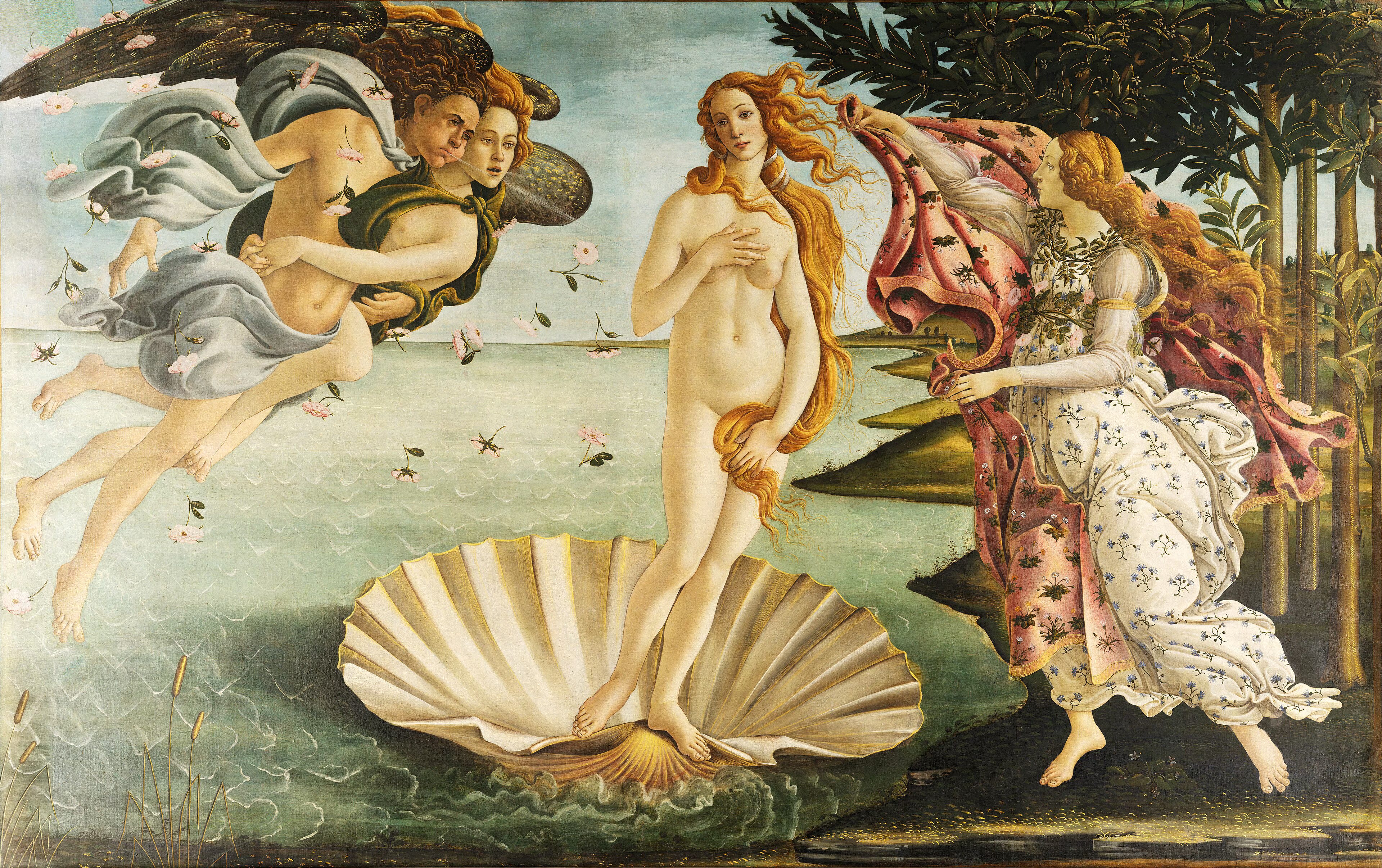
But the reader should not confuse the nameless authority of unsigned wall text with objectivity, no matter how well the text is written. In all cases, the text is the result of choices, whether curatorial or political. Someone decided what information to include and what to omit, and which narrative to present as authoritative. For example, although wall text sometimes tells you how a museum acquired an object, it rarely mentions whether the acquisition was contested, who owned the work before, or what legal disputes surrounded it. It does not explain the market forces that made a certain artist successful or the institutional politics that determined which works were exhibited. It may hide underlying questions, including the legal ones that interrogate who has rights in the work and how the work found its way to where it is now.
What this newsletter is about
This newsletter sheds light on some of these questions. Some pieces will cover more practical ground, like how copyright law works for artists, what happens when an artist estate contests an attribution, and how galleries should handle tightening anti-money laundering rules. Other pieces will explore bigger questions, like whether the Parthenon Sculptures belong in Athens or London, what obligations museums have when they discover that works in their collection changed hands under duress, and who, in the end, gets to decide what belongs where. Someone writing from another perspective—an art historian, a political scientist, or an anthropologist—might approach these questions differently. But I’m writing as a lawyer who works with artists and other actors in the art world, which means I encounter these issues in a particular way: through contracts, disputes, and the rules that govern ownership, authenticity, and control. I also write as someone who spends a lot of time in museums and art galleries, so some pieces will cover what I see there because the wall text, after all, only tells you so much.
I enjoyed reading this. It resonated with my own experience in deciphering wall text. I look forward to future posts